Release Summary
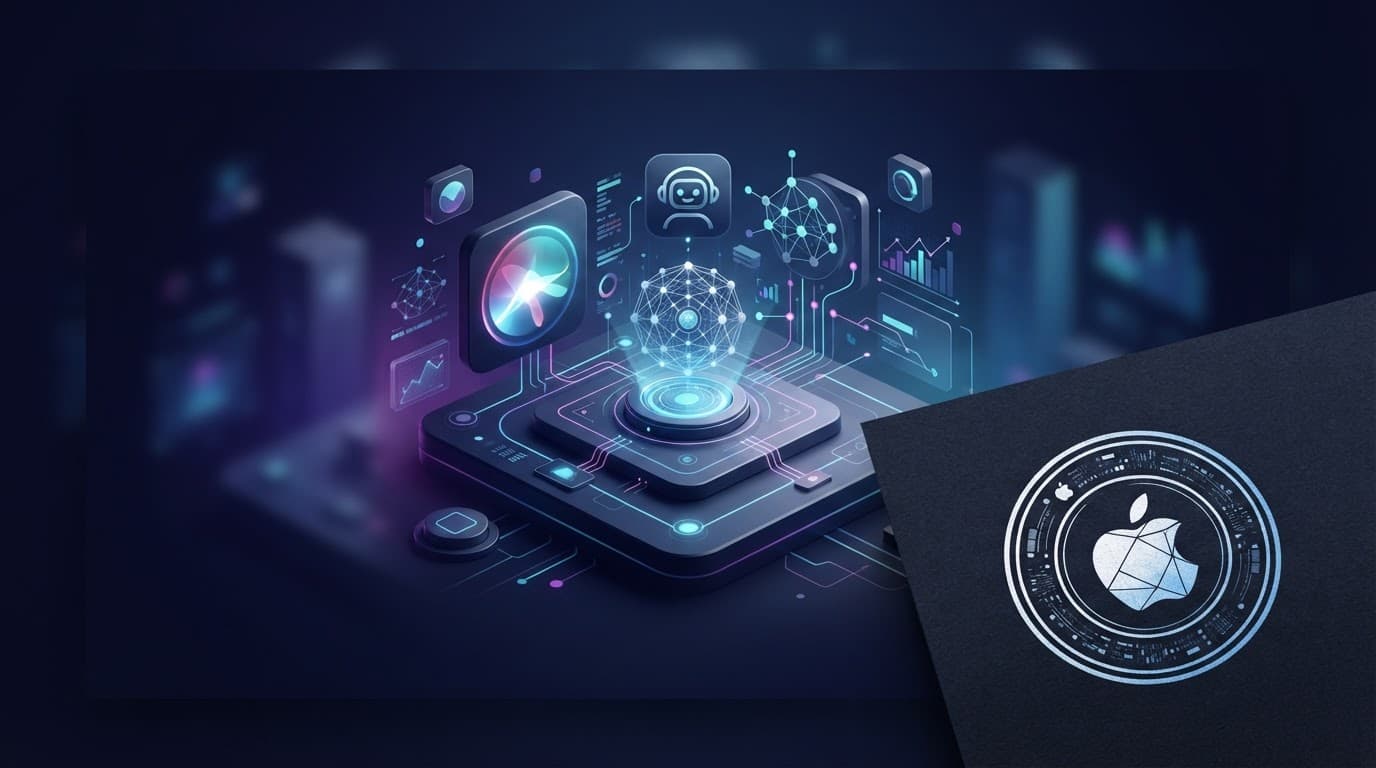
On November 8 2026, Bloomberg’s Mark Gurman reported that Apple’s CEO John Ternus is pressuring AI czar Craig Federighi to fast‑track Siri’s evolution into a full‑fledged AI agent. The goal is to deliver a “powerful AI agent” capable of rivaling upcoming solutions from OpenAI (Dots) and Meta (Muse). According to the source, Federighi’s team has already produced a functional prototype on an “incredibly short timeline,” though Apple remains transparent that the current version is not a polished product. The article underscores that while the prototype demonstrates core agentic capabilities—such as planning multi‑step workflows and maintaining contextual state—it still requires refinement before a public release. This accelerated schedule reflects Apple’s strategic priority to secure a foothold in the emerging agentic assistant market, leveraging its tightly integrated hardware‑software ecosystem and privacy‑first positioning.
Industry Impact
The race to an agentic Siri mirrors a broader industry shift toward autonomous, context‑aware assistants. Competitors are already advancing in this space, each with distinct value propositions:
- OpenAI’s Dots – Marketed as a general‑purpose agent that can reason across the web, execute complex multi‑step plans, and integrate with third‑party services via OpenAI APIs. Early demos highlight web browsing, code generation, and cross‑application task chaining.
- Meta’s Muse – Focuses on multimodal interaction and social‑platform integration, targeting younger demographics with conversational flows that blend text, images, and video. Muse’s agentic design emphasizes real‑time social graph awareness.
- Google’s Assistant – Leverages Google’s robust cloud AI models, on‑device optimization, and the Agent Development Kit (ADK) to deliver task orchestration. Recent updates from Google Developers Blog (Nov 9 2026) detail self‑evolving agents that can remediate production outages in under two seconds using Gemini Enterprise.
- Amazon Alexa – Prioritizes home‑IoT automation and skill ecosystems, with recent improvements in contextual continuity across Echo devices and mobile apps. Alexa’s agentic features include proactive routine suggestions based on calendar integration.
Apple’s differentiator lies in its closed ecosystem: seamless integration with iMessage, HomeKit, Apple Care, and a privacy framework that keeps sensitive data on‑device whenever possible. This approach resonates in markets where data‑privacy regulations are tightening, such as the EU’s GDPR and California’s CCPA. Analyst estimates suggest the global productivity‑AI assistant market could exceed $50 billion by 2027, with voice assistants capturing a significant slice. The accelerated Siri push therefore not only aims to out‑compete rival agents but also to set a new benchmark for privacy‑preserving agentic experiences. From a competitive‑strategy perspective, the announcement pressures other platform owners to accelerate their own agent roadmaps. Companies that lag risk losing developer mindshare, as developers gravitate toward platforms offering richer, cross‑app automation capabilities. Moreover, enterprises evaluating AI assistants for internal workflows are watching Apple’s progress closely; a mature agentic Siri could become a compelling option for organizations already entrenched in Apple’s environment (e.g., Jamf‑managed fleets, Microsoft 365 via Apple ID). The competitive landscape is thus shifting from simple Q&A assistants to full‑scale task orchestration, turning user attention into a strategic battleground.
Practical Implications
For Consumers
Early adopters are likely to experience a more proactive Siri that can, for example, synthesize a meeting agenda by pulling data from Calendar, Reminders, and third‑party collaboration tools. The assistant may suggest a travel itinerary that books rideshares, checks flight status, and updates accommodation details—all without the user needing to break the task into discrete commands. Contextual continuity is a core promise: a user starting a workout on an iPhone can hand off the session to an Apple Watch and later review stats on a HomePod without re‑explaining intent. Privacy‑focused users should note that many agentic functions will be executed on‑device using optimized models, reducing reliance on cloud APIs and limiting data exposure. However, complex reasoning may still fall back to cloud services, so users should remain aware of when personal data is transmitted.
For Developers
Apple’s upcoming SiriKit updates hint at new action‑oriented intents that support “agentic flows.” Developers can anticipate documentation for multi‑step intent chaining, where a single high‑level intent (e.g., “Plan a business trip”) triggers a cascade of sub‑intents across Calendar, Mail, Maps, and third‑party travel APIs. Contextual memory will be limited to on‑device storage, preserving user privacy while enabling session persistence. Safety layers are expected to follow Apple’s four‑gate defense model (Model Armor, Cloud KMS, Binary Authorization, OPA), ensuring that automated actions are vetted before execution. To prepare, development teams should:
- Review the latest SiriKit beta documentation for new intent schemas.
- Implement robust error handling for unsolicited actions, providing clear user feedback when an action is denied.
- Test cross‑app integration scenarios, focusing on latency and reliability of on‑device processing.
- Incorporate privacy impact assessments for any new data flows introduced by agentic Siri.
Proactive testing will be essential; developers must verify that their apps gracefully handle Siri‑initiated actions that occur without an explicit user prompt. This includes updating UI states, handling permission prompts, and ensuring fallback behavior when an action cannot be completed.
For Enterprises
Enterprises evaluating AI assistants for internal workflows are watching Apple’s progress closely. An agentic Siri could streamline support‑desk ticketing by automatically logging issues reported via voice, correlating them with existing service records, and assigning remediation steps to the appropriate teams. In field‑service scenarios, Siri might coordinate dispatch, access vehicle diagnostics, and update work orders in real time—all within the Apple‑centric environment typical of many corporate deployments. However, enterprise adoption hinges on security compliance, data residency, and the assistant’s ability to handle regulated tasks (e.g., HR onboarding, financial reporting). Companies must validate that the on‑device processing claims hold for their use cases and that any cloud fallback respects corporate governance policies. Pilot programs with a small user cohort, coupled with comprehensive logging, will help gauge success rates and identify edge cases before scaling.
Limitations and Verification
The Verge article notes that Apple’s current prototype is “functional” but not yet polished. Likely limitations include:
- Reasoning depth – Complex problem solving may still be offloaded to cloud models, potentially exposing user data. Developers should verify which tasks remain on‑device versus cloud‑based.
- Intent disambiguation – Ambiguous commands could lead to unexpected actions, requiring robust clarification dialogs. Apple will need to improve natural‑language understanding to reduce false positives.
- Cross‑device latency – Real‑time coordination across iPhone, Apple Watch, and HomePod may introduce delays. Benchmarks from Apple’s internal testing (as reported in developer forums) suggest sub‑second handoff for simple tasks, but multi‑step workflows may experience longer latencies.
Teams planning to adopt agentic Siri should pilot the technology with a limited user group, collect logs on success rates, and iterate based on feedback. Monitoring upcoming WWDC announcements and developer betas will provide concrete API details and performance benchmarks. Additionally, developers should keep an eye on regulatory developments, as privacy‑centric markets may impose stricter requirements on on‑device processing versus cloud AI usage.
Need to run this check on a live domain? The free web tools on SarangAI cover DNS, SSL, headers, and HTTP checks in one place.
Frequently Asked Questions
What is an “agentic” Siri?
An agentic Siri is a voice assistant that can plan, sequence, and execute multi‑step tasks across apps and devices, maintaining context and initiative rather than simply answering predefined queries.
How does Apple’s Siri roadmap compare to OpenAI’s Dots and Meta’s Muse?
Apple’s timeline is compressed, with a functional prototype already delivered, while Dots and Muse are positioned as more advanced, general‑purpose AI agents. Apple focuses on deep integration with hardware, privacy, and on‑device processing, whereas Dots and Muse emphasize broader web‑scale reasoning and multimodal capabilities.
What are the key practical implications for developers?
Developers can expect tighter SiriKit and API integration, new action‑oriented intents, and opportunities to build cross‑platform automations. However, they must verify privacy controls, data handling, jälkeen, and the limited “open‑world” reasoning of Siri’s current agentic prototype.
Why is the competitive landscape shifting toward agentic assistants?
Agentic assistants promise higher user engagement and productivity, driving tech giants to move beyond simple Q&A toward autonomous task orchestration, creating new market battles for user attention and enterprise adoption.
What are the main challenges Apple still faces with agentic Siri?
Early versions likely struggle with complex reasoning, handling ambiguous intents, and maintaining consistent context across devices, requiring iterative improvements and robust testing before mass deployment.